If you’ve ever stood in a bakery staring at a super smooth, stretchy gluten-free dough or used a thick, creamy topical cream that doesn’t clump up, odds are you’ve interacted with methyl cellulose (MC) without even realizing it. I’ve been selling MC for over a decade now, and the question I get asked most (by bakers, formulators, lab techs, you name it) is: how the heck does this stuff even work in different solvents? For a long time, I just gave a quick “it depends on polarity” answer, but after troubleshooting hundreds of formulas for clients, I’ve learned there’s way more nuance to how MC behaves—especially when you’re using it with water, organic solvents, or even mixed blends. Today, I’m breaking down exactly what I’ve picked up, no stuffy lab jargon, just real-world supplier perspective straight from someone who’s seen MC work (and fail) in the wild. Methyl Cellulose(MC)
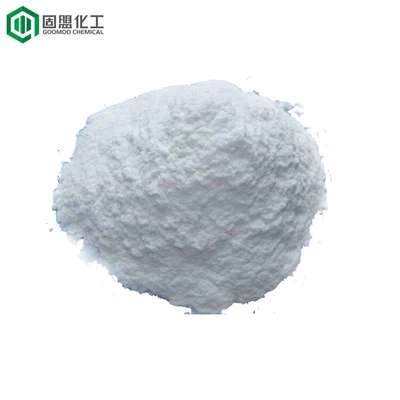
Let’s start with the basics for anyone who’s new here: MC is a cellulose derivative, right? It’s basically plant-based cellulose (think wood pulp or cotton linters) that’s been chemically modified with methyl groups (-CH3) stuck to its sugar backbones. Those methyl groups are the key here—they’re what make MC different from regular cellulose, which is totally insoluble in just about everything. Because MC balances these polar parts (the sugar chains that love water) and nonpolar methyl groups (that hate water and vibe with organic solvents), its behavior shifts hard depending on what solvent you throw it into. That balance is why it’s such a workhorse, but it’s also why it’s finicky sometimes.
First up: the OG solvent everyone uses, water. This is where MC is most well-known, and also where I’ve seen so many clients mess it up if they don’t know the rules. Let’s get one thing straight: MC isn’t “cold water soluble” in the way people think. A lot of first-timers dump MC straight into room temp water and get a lumpy, goopy mess that looks like wet cardboard. Why? Because MC’s methyl groups make it hydrophobic enough that if you add it to water too fast, the outer layer of each particle swells up and locks the inner part away from water—kind of like a popcorn kernel that popped on the outside but is still raw inside. The fix? Most people don’t realize you need to either add MC to HOT water first, then cool it down, or pre-disperse it in a tiny bit of organic solvent (more on that later) before mixing with water. When you handle it right, water-based MC solutions are magic. At my supplier, we’ve got clients making everything from salad dressings that don’t separate to face masks that stay on without dripping, all using water as their solvent here. Another quirk with water: when you heat a dissolved MC solution, it thickens up instead of thinning. Wait, what? Yeah, that’s the reverse of what most polymers do. When MC gets warm, the methyl groups start sticking to each other instead of to water molecules, which makes the whole chain clump together and form a gel. That’s why you see MC used in heat-set glues or bakery fillings that hold their shape when baked. The lower the degree of substitution (DS) on the MC—meaning how many methyl groups are stuck to each sugar unit—the more pronounced this thickening when heating is. I always tell my clients if they need a super heat-sensitive MC for something like a cold beverage, go for a higher DS grade, and if they need that gel for baking, a lower DS is perfect.
Now, let’s switch gears to organic solvents, the other big category. This is where things get really interesting, because MC isn’t just for water anymore. A lot of people are surprised to hear that MC can dissolve in stuff like ethanol, acetone, or even glycerol, but only if it’s the right type of solvent. Unlike water, which is super polar, organic solvents fall into different polarity buckets, and MC’s nonpolar methyl groups love the less polar ones. The biggest takeaway here: MC’s solubility in organic solvents is way more narrow than in water. I can’t just hand you any MC grade and say “this works in ethanol”—nope, you need one with a high DS. High DS MC has more methyl groups, so it’s less polar overall, which means it’ll mix with nonpolar organic solvents way easier. I had a client last year making a wood sealant that needed a polymer that would dissolve in denatured alcohol; they brought me a random MC they’d ordered online, and it wouldn’t mix at all. Turned out it was a low DS grade, meant for water, and all those polar sugar chains repelled the ethanol. Once we swapped them for our high DS ethanol-soluble MC, it mixed perfectly, no clumps, just a smooth sealant that dried clear. Another thing with organic solvents: MC solutions here are way less viscous than water-based ones at the same concentration. If you make a 2% MC solution in water, it’s thick like syrup; make a 5% solution in ethanol, and it’s still thin enough to brush on. That’s because there’s no water to hydrogen-bond with the sugar chains, so the polymer doesn’t expand as much. I always warn formulators that if they’re using MC in organic solvents, they might need to use a higher concentration to get the same viscosity as a water-based formula.
The wildcard here is mixed solvents, which is where 90% of the real-world formulas I work on live. A lot of people don’t make stuff with pure water or pure organic solvents—they mix them for balance, like a lotion with water and glycerol, or a spray adhesive with water and ethanol. How does MC behave here? It all depends on the ratio of water to organic solvent, and the DS of your MC. For example, if you mix 70% water and 30% ethanol, most MC grades will still dissolve fine, because there’s enough polar water to pull on the sugar chains. But if you crank the ethanol up to 60% or higher, suddenly it gets tricky. Too much organic solvent can disrupt the hydrogen bonds between MC and water, which makes the MC start to precipitate out of the solution. I had a hair gel client a while back who tried to cut costs by adding more ethanol to their formula, and their gel went from smooth to grainy in a week. They were using a regular water-soluble MC, not one formulated for mixed solvent blends. Once we switched them to a grade with a medium DS that’s designed to handle higher ethanol levels, their gel stayed smooth for months, even with the extra ethanol. Another quirk with mixed solvents: sometimes you can use organic solvents to help dissolve MC in water, without having to heat it up. If you pre-mix MC in a little bit of propylene glycol or ethanol (I usually recommend 1 part organic solvent to 4 parts MC) before adding to water, it disperses way easier, no lumps. That’s a game-changer for cold-process formulas where you can’t heat things up, like certain personal care products or craft supplies.
Now, let’s talk about some common pain points I see clients run into, just to make this practical. First, solubility issues: if your MC is clumping in whatever solvent you’re using, check your DS first. Low DS = better water solubility, high DS = better organic solubility. If you’re using mixed solvents, test a small batch before scaling—solvents don’t always play nice with each other, and MC can be super sensitive to even tiny ratio changes. Second, viscosity inconsistency: if your MC solution is thick one day and thin the next, it’s probably a solvent purity issue. Even small amounts of impurities in organic solvents (like water in ethanol, or vice versa) can throw off MC’s solubility. I always tell clients to use solvent grades that are as pure as possible for their MC formulas. Third, temperature effects beyond water: when MC is in organic solvents, heating it won’t thicken it like it does in water—actually, it’ll thin out a bit, because the organic solvent doesn’t form those hydrogen bonds with MC that make it gel. That’s a key difference if you’re designing something like a spray that needs to be liquid in the bottle but set when it hits a warm surface—water-based MC would work here, organic-based won’t.

At the end of the day, MC’s whole thing is that it’s a versatile polymer, but only if you match its chemistry to your solvent. I’ve seen clients make everything from gluten-free bread that’s softer and less crumbly to art paints that stay wet longer to pet-safe fire extinguishers, all using the right MC grade for their solvent. If you’re working on a new formula and you’re not sure which MC will work with your solvent, or you’ve got a formula that’s not performing how you want, hit me up. I don’t do fancy sales pitches, just 15 years of knowing how MC behaves in water, organic solvents, and everything in between. Whether you’re a small bakery testing a new recipe or a big formulator scaling a personal care line, I can help you pick the right grade and work out the kinks. No gimmicks, no hidden fees, just good old supplier know-how.
Bismuth Vanadate References:
- Heinze, T., & Liebert, T. (2001). Cellulose derivatives as functional polymers. Progress in Polymer Science, 26(1), 197–262.
- Sarkar, N. (1979). Methyl cellulose: solution properties and applications. Journal of Applied Polymer Science, 23(5), 1259–1271.
- Fengel, D., & Wegener, G. (1984). Wood: Chemistry, Ultrastructure, Reactions. Walter de Gruyter.
- Clasen, C., & Kulicke, W. M. (2001). Rheology of cellulose derivatives. Advances in Polymer Science, 153, 105–165.
- Kloek, W., & Wolf, B. A. (1995). Solubility and phase behavior of methyl cellulose in mixed solvents. Macromolecules, 28(12), 4228–4235.
Changsha Goomoo Chemical Technology Co., Ltd.
With abundant experience, we are one of the most reliable methyl cellulose(mc) manufacturers and suppliers in China. We warmly welcome you to buy customized methyl cellulose(mc) made in China here from our factory. If you have any enquiry about free sample, please feel free to email us.
Address: No.61,Jinma Road,Kaifu District Changsha 41005,Hunan,P.R.China
E-mail: allen@goomoochina.com
WebSite: https://www.gumchem.com/
