If you’ve ever stepped foot inside a steel warehouse—even for just a quick load check—you’ve likely noticed it before: the sharp, metallic tang in the air, a faint haze near cutting stations, or the low hum of ventilation fans working overtime to push something out. For years, people outside the steel supply industry have written off these signs as “just part of the job,” but as a warehouse supplier that’s worked with steel fabricators, distribution centers, and processing plants across North America for over a decade, I’m here to tell you: the air inside a steel warehouse isn’t just “dirty”—it’s a carefully balanced (and often under-monitored) mix of particles, gases, and moisture that directly impacts worker health, equipment lifespan, and even the quality of the steel products stored inside. Steel Warehouse
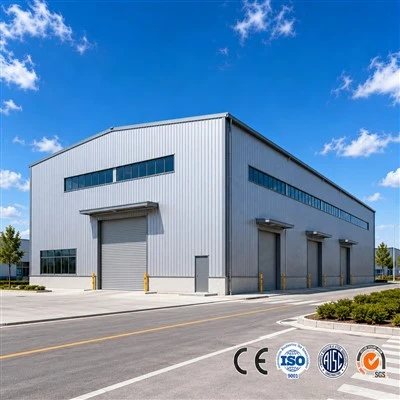
Let’s start with the basics: what makes up the air in a typical steel warehouse, and how does it differ from the clean outdoor air we breathe every day? Unlike a residential home or even a retail space, a steel warehouse isn’t a sealed, climate-controlled box—most are built with high walls, roll-up bay doors that open multiple times an hour, and roof vents designed to let in fresh outdoor air. But that constant flow isn’t enough to dilute the pollutants generated by the core activities of the space: handling raw steel, cutting or shaping it, welding, grinding, painting, and even storing large volumes of metal that can off-gas when exposed to temperature shifts.
The most common (and most studied) pollutant in steel warehouses is particulate matter, or PM. These are tiny solid or liquid fragments small enough to stay suspended in air for hours or even days. They’re categorized by size, and that size makes a huge difference for both workers and equipment. Coarse PM (10 to 2.5 micrometers, called PM10) is what you might see settling on warehouse rafters or coating the surface of a steel beam—think metal shavings from sawing, rust particles from raw steel stock, or dust picked up from the concrete floors of the yard outside. Then there’s fine PM (less than 2.5 micrometers, PM2.5), which is far more insidious. This comes from welding fumes, grinding sparks that burn metal into tiny fragments, and even the combustion of fuels in forklifts or on-site generators. What makes PM2.5 dangerous is that it’s small enough to bypass the body’s natural lung defenses, entering the bloodstream and causing long-term issues like asthma, chronic bronchitis, or even cardiovascular disease in people who work in these spaces 40+ hours a week.
But particulate matter isn’t the only culprit. Gaseous pollutants are also a major factor, especially in warehouses that do any form of surface treatment or coating. Ozone, a reactive gas that forms when volatile organic compounds (VOCs) from paints, adhesives, or cleaning supplies mix with sunlight, is common in warehouses that leave bay doors open during the day. Then there’s nitrogen dioxide (NO2) and sulfur dioxide (SO2), both emitted from diesel-powered equipment used to move heavy steel loads and from the burning of fossil fuels in on-site boilers or heaters during cold months. For steel stored in the warehouse, these gases don’t just affect air quality—they accelerate rust formation, a problem that can ruin entire batches of finished steel if not managed properly.
Moisture is another often-overlooked component of steel warehouse air, and it’s tied directly to temperature and ventilation. Steel is hydroscopic, meaning it easily absorbs and retains moisture. When outdoor air with high humidity enters the warehouse, cools as it comes into contact with cold steel beams or concrete floors, it condenses into tiny water droplets. This not only creates damp, muggy air that makes workers uncomfortable in the summer, but it also reacts with steel to form surface rust, which can reduce the value of raw or finished steel by 10% or more, per data from the Steel Manufacturers Association.
Now, you might be wondering: how do steel warehouse operators usually handle this? For a long time, the approach was “more ventilation”—leaving bay doors open 24/7, cranking up old ventilation fans, or just accepting that the air was “part of the territory.” But that’s a short-sighted solution. Too much outdoor ventilation in winter can drive heating costs through the roof, while too little traps pollutants, leading to poor air quality (often called “indoor air pollution,” or IAQ) that violates OSHA standards for worker exposure. In the U.S., OSHA sets strict limits for many steel warehouse pollutants: for example, welding fumes containing iron, manganese, or chromium can’t exceed 5 milligrams per cubic meter of air over an 8-hour workday, and PM10 limits are even lower for active production areas.
Over the past five years, we’ve seen a shift in how our warehouse design clients approach air quality. Instead of just focusing on building a structure that can hold heavy steel, they’re asking for systems that actively monitor and regulate air composition. That means installing real-time IAQ sensors that track PM levels, humidity, and gaseous pollutants, paired with smart ventilation systems that adjust based on current conditions—opening or closing vents, speeding up or slowing down fans, or even bringing in fresh air only when needed. Some of our clients have also added localized capture systems near high-pollution areas, like welding stations or sawing lines, that suck fumes and shavings directly at the source, before they can spread throughout the warehouse.
I’ll be honest: when I first started in this industry 12 years ago, air quality was almost an afterthought. Most of the projects we focused on were about load capacity, bay door size, and building durability for heavy steel stock. But a few key events shifted that perspective. The first was a visit to a small steel distribution client in Ohio in 2017, where a worker collapsed from exposure to high welding fumes, leading to a costly OSHA fine and months of downtime. The second was working with a large Midwest fabricator that lost $200,000 worth of galvanized steel because improper ventilation trapped moisture and ozone, causing rust on the product’s surface that couldn’t be removed. Those experiences made it clear: good air quality in a steel warehouse isn’t just a health issue—it’s a financial one. Poor IAQ leads to higher worker turnover, more equipment maintenance, spoiled steel inventory, and regulatory fines.
Let’s break down what the numbers tell us. A 2022 study from the National Institute for Occupational Safety and Health (NIOSH) found that steel warehouse workers have a 35% higher risk of developing chronic respiratory conditions than workers in other manufacturing sectors, almost entirely due to unregulated exposure to metal particles and welding fumes. For businesses, that translates to an average of $12,000 per worker annually in healthcare costs and lost productivity, per the same NIOSH report. On the product side, the Steel Warehouse Association estimates that 8% of finished steel inventory is lost each year to rust and contamination from poor air quality—money that could be avoided with proper design and monitoring.
So, what does a well-designed, air-quality-focused steel warehouse look like? From our experience, it’s a balance of structure, technology, and operational practices. First, the layout: production areas (welding, grinding, cutting) are separate from storage areas to limit pollutant spread. Roof vents are sized and positioned to pull fumes upward, away from worker breathing zones, rather than just pushing them into other parts of the space. Smart ventilation systems are connected to IAQ sensors that send real-time data to a central control panel, so managers can adjust settings from a phone or computer, even when they’re off-site. We also recommend installing humidity control systems, like dehumidifiers for climate-controlled storage zones, to keep moisture levels between 40% and 60%—the sweet spot that prevents rust without making the air too dry (which can worsen irritation for workers with respiratory issues).
I’ve seen firsthand what a difference these changes make. Last year, we worked with a steel processing plant in Texas that had been struggling with high PM levels and rust on their cold-rolled steel stock. We redesigned their ventilation system to add localized fume capture near their two plasma cutting stations, installed 12 IAQ sensors throughout the warehouse, and adjusted their humidity controls for their finished steel storage bay. Within six months, their OSHA compliance audits passed with zero violations, their worker turnover dropped by 18%, and they reported a 9% reduction in steel inventory loss from contamination. That’s not just a win for the environment or worker health—that’s a win for their bottom line.
Of course, air quality in a steel warehouse isn’t a “set it and forget it” solution. It requires regular testing, maintenance of ventilation systems, and training for workers to recognize signs of poor air quality (like eye irritation, difficulty breathing, or a persistent metallic smell). But the good news is that technology has made this easier than ever. Today’s IAQ sensors are affordable, accurate, and require minimal upkeep, and smart ventilation systems pay for themselves in energy savings and reduced product loss within 3 to 5 years, per our client data.
If you’re a steel warehouse operator, fabricator, or distributor, I can’t stress this enough: air quality isn’t something to overlook. It’s a critical component of worker safety, product value, and long-term business success. When you’re designing a new warehouse or renovating an existing one, don’t just focus on how much steel you can store—focus on how well the space protects the people working in it and the products you count on for revenue.
If you’re ready to learn more about designing a steel warehouse with air quality at its core, our team has decades of experience helping clients balance structure, technology, and compliance. We’ve worked with facilities of all sizes, from small local distribution centers to large national processing plants, and we can help you assess your current IAQ, recommend cost-effective upgrades, or design a new space that meets both your operational and safety goals. Don’t wait until an OSHA audit or a batch of spoiled steel puts your business at risk—reach out to start a conversation about optimizing your steel warehouse’s air quality today.
Steel Workshop Buildings References
National Institute for Occupational Safety and Health (NIOSH). (2022). Occupational Exposures to Particulate Matter in Steel Warehouses: Health and Economic Impacts. Centers for Disease Control and Prevention.
Steel Manufacturers Association. (2021). Steel Inventory Contamination: Causes, Prevention, and Cost Mitigation. SMA Technical Report Series.
Occupational Safety and Health Administration (OSHA). (2023). permissible Exposure Limits for Air Contaminants. U.S. Department of Labor.
Steel Warehouse Association. (2022). Best Practices for IAQ Management in Metal Storage and Processing Facilities. SWA Industry Guide.
Liaoning Zhongbei Steel Structure Engineering Co., Ltd.
Liaoning Zhongbei Steel Structure Engineering Co., Ltd. is one of the most professional steel warehouse manufacturers and suppliers in China, also supports customized service. We warmly welcome you to buy advanced steel warehouse made in China here from our factory. Also, quotation is available.
Address: No. 239 – 1, Shenbei West Road, Yuhong District, Shenyang, Liaoning.
E-mail: Info@cnssgroup.cn
WebSite: https://www.cnssprefabbuildings.com/
