If you’ve ever walked through a data center server room on a hot summer afternoon, you know that liquid cooling manifolds are the unsung heroes keeping complex systems from throttling or failing. As someone who’s been in the liquid cooling manifold supply business for 12 years—working with data center operators, automotive engineers, and even industrial machinery designers—I’ve seen firsthand how even a tiny corrosion issue can turn a $5,000 manifold into a $50,000 disaster in a matter of months. Last year, I worked with a regional data center that skipped proper corrosion prevention on their custom manifolds; within 18 months, their stainless steel lines had pitted so badly they had to shut down a whole rack of high-performance servers, costing them over $120,000 in downtime and replacement parts. That’s why today, I’m breaking down the science-backed corrosion prevention measures we rely on for every manifold we supply, straight from the experience of a vendor who’s paid to learn these lessons the hard way. Liquid Cooling Manifold
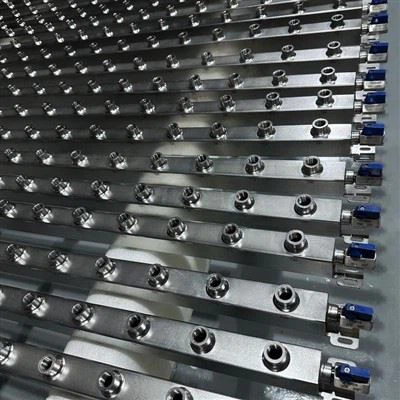
First, let’s start with the basics: why liquid cooling manifolds corrode in the first place, because you can’t fix a problem if you don’t understand its root cause. Most cooling loops use either water-based coolant (the most common for general-purpose and data center use) or specialized synthetic fluids for extreme environments. Corrosion happens when two or more different metals come into contact with an electrolyte (that’s your coolant, which has ions that conduct electricity), creating a galvanic cell—think of it like a tiny battery that eats away at the less noble metal. Even if you use a single metal, things go wrong if the coolant has impurities like oxygen, excess chloride, or low pH (too acidic) or high pH (too alkaline). For example, a common mistake new operators make is using tap water mixed with basic tap chemicals to top off loops; the chloride in tap water is a major pitting agent for stainless steel, one of the most popular manifold materials. At our company, we see this mistake all the time, so the first line of defense is choosing the right manifold material tailored to your coolant and application.
Now, material selection is not a one-size-fits-all decision, and it’s the most impactful corrosion prevention step you can take. Let’s walk through the most common materials we work with, and when each is best suited for corrosion resistance. First, 316L stainless steel—this is our go-to for most data center and general industrial manifolds, and for good reason. Unlike 304 stainless steel, which is prone to chloride-induced pitting, 316L has molybdenum added to its alloy, which creates a protective chromium-molybdenum oxide layer that repels chloride ions. I remember a client who switched from 304 to 316L for their manifolds after their first set corroded within a year; three years later, those manifolds are still running without any corrosion issues, even with regular top-offs of deionized water with a small amount of corrosion inhibitor. For extreme applications, like automotive battery cooling or industrial refrigeration that uses high-temperature synthetic coolants, we recommend titanium or even Hastelloy. Titanium is naturally corrosion-resistant because it forms a thin, inert titanium oxide layer when exposed to oxygen, making it perfect for loops that use aggressive coolants. We supplied a set of titanium manifolds to a electric vehicle manufacturer last year that runs at 180°F with a glycol-based coolant, and their test data showed zero corrosion after 12,000 hours of operation—way better than the 316L manifolds they tested previously, which had minor surface oxidation after 6,000 hours. One note here: never mix materials in the same loop unless you’ve calculated galvanic compatibility. For example, pairing aluminum manifolds with copper lines will almost always lead to galvanic corrosion, because aluminum is far less noble than copper. We always provide a material compatibility chart with every manifold we ship, and our team will help clients adjust their loop design to avoid this costly mistake.
Next, the coolant you choose is just as important as the manifold material. Tap water is never a good option for closed-loop liquid cooling systems, full stop. Even filtered tap water has trace amounts of chloride, calcium, and magnesium that can build up over time and cause corrosion, scaling, and reduced flow. Deionized (DI) water is the standard base fluid for most loops, but even DI water needs additives to prevent corrosion. We work with clients to select corrosion inhibitor packages tailored to their manifold material and coolant. For 316L stainless steel manifolds, we often recommend a mixed-metal inhibitor blend that includes nitrites, molybdates, and phosphates—these chemicals form a protective layer on the metal surface that blocks electrolyte ions from reaching the metal. For aluminum manifolds, we use inhibitors that are specifically formulated to protect aluminum, because some nitrite-based inhibitors can cause pitting on aluminum. One common myth we hear is that “distilled water is the same as DI water” for cooling loops—this isn’t true, because distilled water still has trace ions, while DI water has most of them removed to a level that’s safe for long-term loop operation. We also remind clients to maintain proper coolant pH levels: for metal manifolds, the ideal pH range is between 8.2 and 8.8. If pH drops below 7 (acidic), the protective oxide layer on stainless steel breaks down, leading to pitting; if pH rises above 9.5 (alkaline), you risk scaling and aluminum corrosion. For synthetic coolants, the pH range is usually a bit wider (7.5 to 9.0), but testing is still critical.
Once you have the right material and coolant, the next step is system design and installation best practices that prevent corrosion, starting with proper venting and oxygen control. Oxygen is one of the biggest culprits in corrosion, because it reacts with metal surfaces to form oxides, and it accelerates galvanic cells. Many new installers leave air pockets in their manifolds or cooling loops during installation, and over time, those air pockets let oxygen dissolve into the coolant, leading to oxidation and pitting. That’s why we design every manifold with integral vent ports at the highest point of the loop—our engineers calculate the maximum air volume for each custom manifold and size the vent port to automatically bleed trapped air during system startup, without letting oxygen enter later. We also advise clients to use pressurized closed-loop systems, which reduce the amount of air that can dissolve into the coolant. A recent data center client of ours upgraded their venting system after experiencing 2 microns of pitting on their manifolds in 12 months; after switching to our manifold with integral vents and pressurizing the loop to 15 PSI, pitting stopped entirely, and their inhibitor usage dropped by 30%. Another design mistake we see is rough manifold surfaces. If the interior of your manifold has machining marks or sharp edges, corrosion will start at those high-stress points, because the oxide layer is weaker there. That’s why all our manifolds go through a electropolishing process after machining—this removes surface imperfections, creates a smooth, uniform interior, and enhances the protective oxide layer of stainless steel and titanium. We also passivate our metal manifolds before shipping, which is a chemical process that removes free iron and other contaminants from the metal surface, ensuring the protective oxide layer forms evenly. Passivation is a step many smaller manufacturers skip, but it’s one of the reasons our manifolds have a 10-year corrosion resistance warranty, compared to the 2-year warranty most competitors offer.
Regular maintenance is the final piece of the corrosion prevention puzzle, because even the best-designed manifolds and coolants will degrade over time if you don’t monitor them. We work with clients to create a customized maintenance schedule, but the core steps are consistent: regular coolant testing, annual flushing and inhibitor top-offs, and visual inspections of manifold surfaces. Coolant testing should check for pH levels, chloride concentration, inhibitor concentration, and total dissolved solids (TDS). For example, if chloride levels rise above 50 ppm in a stainless steel manifold, that’s a red flag—chloride ions break through the protective oxide layer and cause pitting, so you’ll need to flush the loop and add fresh coolant and inhibitors. We provide free coolant test strips to all our clients, and our technical team is available to interpret test results and adjust their maintenance plan as needed. We also advise clients to avoid over-tightening manifold fittings, because overtightening can cause stress cracks in the metal, which are perfect entry points for corrosion. Last year, a client called us in a panic because their manifold was leaking at a fitting; when we inspected it, the installer had overtightened the compression fitting, creating a small crack that let coolant seep out, and corrosion had started to form inside the crack. We sent a replacement manifold at no extra cost, and trained their team on proper fitting torque (35 lb-ft for 316L stainless steel fittings, per industry standards) to prevent future issues.
Now, I know many of you reading this might be dealing with an existing manifold that’s already showing signs of corrosion. While the steps above are for preventing corrosion in new systems, there are fixes for existing manifolds too: you can add supplemental corrosion inhibitors, repair pitted areas with metal coatings, or even line older manifolds with epoxy or other inert materials. But these are temporary solutions, and if you want long-term corrosion prevention, it’s almost always more cost-effective to upgrade to a manifold designed with the measures I’ve outlined today. That said, every application is different, and what works for a data center with 100 manifolds won’t work for a small industrial machine with two.
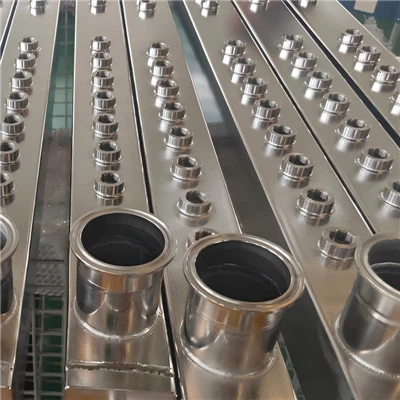
If you’re currently dealing with corrosion issues in your liquid cooling system, or you’re designing a new system and want to avoid the pitfalls I’ve outlined, our team is here to help. We don’t just sell manifolds—we work with you to select the right material, design the manifold to fit your loop, and provide ongoing support to make sure your system stays corrosion-free for years. Stop dealing with unplanned downtime and expensive repairs from corroded manifolds. Reach out to our team to discuss your specific application, and we’ll walk you through the best corrosion prevention measures tailored to your needs.
Finned Condenser Tube References
- ASHRAE. (2021). Liquid Cooling Systems for Data Centers: Corrosion Prevention and Control. ASHRAE Journal, 63(8), 42-49.
- Metal Samples Company. (2022). Galvanic Corrosion: Causes, Prevention, and Compatibility Guidelines. Corrosion Technical Briefs, 17(3), 1-8.
- International Organization for Standardization (ISO). (2019). ISO 15716:2019, Cooling Systems for Industrial Process Applications—Corrosion Control in Liquid Coolant Loops. ISO Press.
- Society of Automotive Engineers (SAE). (2020). SAE J1622: Corrosion Testing of Automotive Thermal Management Fluids. SAE International.
China Super Tech Co., Ltd.
As one of the most professional liquid cooling manifold manufacturers and suppliers in China, we’re featured by quality products and good service. Please rest assured to wholesale OEM liquid cooling manifold from our factory. Also, custom service is available.
Address: Wangjing Science and Technology Park, Guangshun North Street, Chaoyang District, Beijing
E-mail: sales@316liquidcooling.com
WebSite: https://www.316liquidcooling.com/
