Hey there, fellow boat owners, weekend warriors, and marine tech nerds! Let’s be real—nothing kills a day on the water faster than a dead battery mid-trip, right? And if you’re a boat owner, you’ve probably dropped a pretty penny on a marine battery charger over the years, only to realize those little power hogs are sneaking energy when you least expect it. As someone who’s been in the marine battery charger game for years, I’ve seen it all: guys leaving their chargers plugged in 24/7, panicking when their boat’s cranking power is shot, and wondering why their electricity bills are higher than they should be. Today, I’m breaking down the no-BS, science-backed ways to save energy with your marine battery charger—no fluff, just actual stuff you can do starting this afternoon. Marine Battery Charger
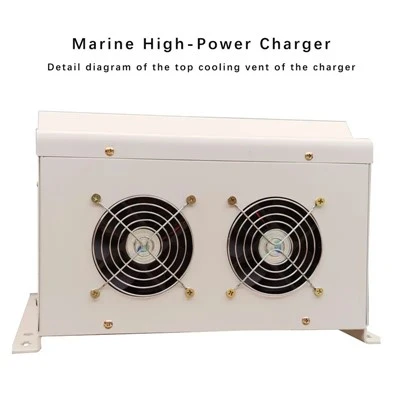
First off, let’s cut through the jargon so we’re all on the same page. Marine battery chargers aren’t just generic plug-in boxes—they’re designed for deep-cycle batteries, which power trolling motors, live wells, radios, and all that other fun boat gear. Most modern ones are “smart chargers,” which means they adjust their output based on the battery’s charge level. But even smart ones can waste energy if you’re using them wrong. I’ve talked to so many customers who say, “I just plug it in when I get home and don’t touch it for a week”—that’s the #1 mistake. Smart chargers have a “float mode” that keeps the battery topped off, but it’s super inefficient if you leave it running when the battery’s already full. Think of it like leaving your coffee maker on all day just because you used it at 7 a.m.—why waste power?
Let’s start with the big one: match your charger to your battery’s capacity, not the other way around. This is where I see so many people mess up. If you have a 100Ah deep-cycle battery, a 20A charger is overkill, and it’ll pull way more energy than needed. Wait, let’s do the quick math—Ah is amp hours, which is how much power a battery can hold. A charger’s amp rating should be roughly 10-20% of your battery’s total Ah for deep cycles. So a 100Ah battery? Stick to a 10-20A charger max. If you use a 30A charger on that same battery, it’ll charge it faster, but it’s also cycling on and off more often to avoid overcharging, which wastes energy. Plus, you’re more likely to overheat the charger, which is a whole other headache (and a safety risk, but that’s a side note). I can’t tell you how many times a customer comes back to us saying, “I used this 25A charger on my two 100Ah batteries and my electric bill went up $50 a month”—match the size, and that’s gone.
Next, time your charging sessions like a pro, not a sleep-deprived boater. Most people plug in their charger right after a day on the water, which is fine, but don’t leave it plugged in once the battery’s full. Smart chargers usually take 4-8 hours to fully charge a dead deep-cycle battery, depending on the size. Once it hits 100% charge, the float mode only uses like 1-2 amps—wait, but if you’re only going to use your boat once a week, why leave it running for 6 more days? Here’s a trick I’ve recommended for years: use a timer! You can get a cheap $10 outdoor timer (it’s marine-rated, so it works even if it gets splashed) that lets you set the charger to only run 8 hours a night, 2 nights a week. That’s more than enough to keep your battery topped off without wasting power. I had a guy in Florida tell me he tried this and saved $75 in his first month—nothing crazy, but every dollar counts when you’re dealing with boat expenses. Also, avoid charging in extreme temperatures if you can. Batteries hate super hot or super cold conditions—charging a battery in 90-degree weather makes the charger work harder to get to full charge, which wastes energy, and in 30-degree weather, the charge is slower, so you’re leaving the charger plugged in longer. If you have to charge in extreme temps, pick a covered spot on your dock, not out in the sun or snow.
Then there’s the issue of power draw from idle chargers. Wait, even if your charger is unplugged, does it pull power? Some cheap chargers do—they’re like that old TV remote that uses batteries even when you’re not using it. That’s called “vampire power,” and it’s real. So even if you’re not charging, if your charger is still plugged into the wall, it might be sucking 1-5 watts, which adds up over a year. Let’s do that math: 3 watts a day is 1,095 watts a year, which is about 1 kWh. In most places, that’s like 12 cents a year, but if you have multiple chargers (like one for your trolling motor, one for your cranking battery), that’s 2-3 kWh a year—still small, but why waste it? The fix here is simple: when you’re done charging, unplug the charger from the wall, not just the battery. Or use a power strip with a switch—flip it off when you’re done, and no vampire power. I always tell my customers: if you’re not looking at the charger, turn it off. That’s a rule of thumb that works for everything from phone chargers to marine stuff.
Another thing: keep your battery and charger clean and well-maintained. Corrosion on the battery terminals or a dusty charger can make the connection weak, which means the charger has to work harder to transfer power to the battery. Weak connections cause resistance, and resistance wastes energy—pure physics. I’ve seen customers with battery terminals covered in white gunk (that’s corrosion, by the way) who say their charger “never gets the battery fully charged”—turns out, the charger was working overtime because the connection was bad. The fix is easy: once a month, use a wire brush to clean the terminals, put a little dielectric grease on them to prevent future corrosion, and wipe down your charger with a dry cloth (avoid getting water in the ports). A clean connection cuts down on wasted energy, and your charger lasts longer too—win-win.
Wait, what about if you have a multi-bank charger? A lot of boats have two or three batteries, so they use a multi-bank charger that charges each battery separately. Here’s the thing: most multi-bank chargers are smart, but some cheap ones charge all banks at the same time even if one battery is already full. So if you have a cranking battery that’s 100% charged, and a trolling motor battery that’s half dead, the charger is still sending power to the cranking battery, which is a waste. Modern smart multi-bank chargers only send power to the battery that needs it, but if you have an older model, you might want to check the settings. I recommend upgrading to a smart multi-bank charger if you’re still using an old one—yes, it’s an upfront cost, but it’ll save you way more in energy bills over time. I had a customer with a 3-bank old charger who was wasting 20% more energy a month—he upgraded, and that went down to 5% total. That’s not just good for his wallet, it’s better for the planet too.
Also, avoid trickle charging for long periods if you don’t need it. Trickle chargers are designed to maintain a battery over months of storage, not to charge it quickly. If you’re storing your boat for the winter, a trickle charger is fine, but don’t use one for regular charging—they take forever, and they run almost non-stop, which wastes energy. A smart charger is way more efficient for regular use, as it switches to float mode once full. I’ve seen people buy cheap trickle chargers because they’re cheaper upfront, but end up spending more on energy over time. It’s like buying a cheap laptop that dies in a year vs. a slightly more expensive one that lasts 5 years—you pay a little more now, but save money later.
Let’s talk about a common myth: “Leaving the charger plugged in keeps my battery healthy.” I’m here to bust that. Smart chargers do a good job, but float mode isn’t perfect. If you leave a charger plugged in for weeks on end, even on float mode, you’re still using power, and over time, it can actually shorten the battery’s lifespan because the constant small charge can damage the battery’s cells. So “healthy” doesn’t mean plugged in 24/7—it means charging when you need it, then unplugging once it’s full. I had a guy who left his charger plugged in for 6 months last winter, and when he went to use his boat in spring, the battery was dead. Turns out, the float mode had failed, and the charger was overcharging the battery, killing it. That’s a $150 battery that he could’ve saved if he just checked the charge level once a month.
Now, let’s get into some quick, actionable steps you can do today, no tools required: 1. Check your charger’s amp rating vs. your battery’s Ah—if they don’t match, that’s your first fix. 2. Use a timer to limit charging to 6-8 hours after use. 3. Unplug the charger from the wall when it’s done charging (or use a switch power strip). 4. Wipe down your charger and clean battery terminals. 5. If you have an old charger, consider upgrading to a smart model. These are all easy, and you’ll notice the difference in your next electricity bill (or your battery’s performance) right away.
As a marine battery charger supplier, I test every single charger we sell to make sure they’re energy-efficient and safe. We hear all the time from customers who say they used our chargers and their energy use went down, and that’s what we care about—saving you money and making your boating experience better, not more stressful. If you’re not sure what size charger you need, or if you have questions about your current setup, we’re here to help. Don’t waste energy on a charger that’s not working for you—reach out, and we can help you pick the right one for your boat and your budget.
At the end of the day, saving energy with your marine battery charger isn’t just about cutting a few dollars from your bill—it’s about being smart with your gear, extending the life of your batteries, and not wasting resources. Boating is supposed to be about fun on the water, not stressing about dead batteries or high utility bills. Follow these tips, and you’ll be out on the water more, and less time dealing with charger headaches.
Multi Battery Charger References: 1. National Marine Manufacturers Association. (2022). Marine Battery Charger Efficiency & Best Practices. 2. Battery University. (2021). Deep-Cycle Battery Charging Guide for Marine Applications. 3. U.S. Department of Energy. (2020). Reducing Vampire Power Consumption in Marine Equipment.
Huizhou Qiangfeng Power Technology Co., Ltd.
Huizhou Qiangfeng Power Technology Co., Ltd. is one of the most professional marine battery charger manufacturers and suppliers in China, featured by quality products and good service. We warmly welcome you to buy customized marine battery charger made in China here from our factory. If you have any enquiry about quotation and free sample, please feel free to email us.
Address: No. 28, Hu’ao Avenue, Shiwan Town, Boluo County, Huizhou City, Guangdong Province
E-mail: Komco@Jinlidianqi.cn
WebSite: https://www.autobatterychargers.com/
