Hey everyone, Corrugated Fin Forming Machine
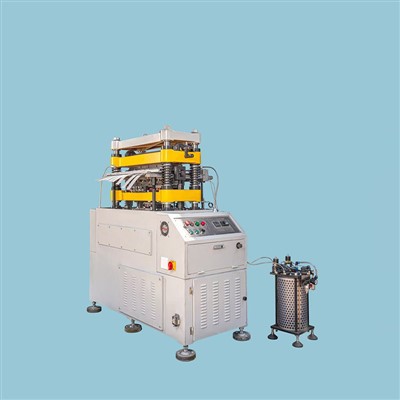
If you’ve ever walked past a car factory, a power plant, or even a HVAC service shop, you’ve probably seen a tiny, unassuming part that makes huge differences: corrugated fins. Those wavy little metal plates are the unsung heroes of heat exchangers—they help transfer heat or air efficiently, whether you’re talking about a car’s radiator, a big building’s AC unit, or a generator’s cooling system. But here’s the thing: one size for corrugations just doesn’t work. A fin for a compact car’s tiny radiator is totally different from one for a wind turbine’s massive cooling system, right? So how do we, as someone who builds corrugated fin forming machines, make that happen day in and day out? That’s exactly what I want to break down with you today—no boring textbook stuff, just real talk from the team that tunes these machines to get the job done.
Let’s start with the basics, quick. A corrugated fin forming machine is basically a super-precise metal roller bender, but way more sophisticated than the one you used to shape wire as a kid. It takes thin metal sheets (usually aluminum or copper, since they conduct heat well) and runs them through a series of grooved rollers to punch, bend, and shape those wavy corrugations. But the key here is adjustability. If you’ve ever tried to tweak a tool to get a specific shape, you know it’s not just cranking a knob. There are a bunch of variables we control, and each application needs its own mix. Let’s dive into the main ones that change from job to job.
First up: corrugation pitch. That’s the distance between the peaks of those wavy lines, right? Like, if you have peaks every 5mm vs. every 15mm, that’s a totally different fin. Why does that matter? Well, for things that need to move a lot of air fast—say, a truck’s radiator, which has to cool a big diesel engine—you want wider pitch. More space between waves means air flows through easier, less drag, more cooling power. But for tiny, space-limited stuff, like a smartphone’s tiny heat sink, you need super tight pitch—like 2mm or even smaller. More corrugations packed into the same space means more surface area for heat to jump from the fin to the air, which is perfect for small electronics. Now, how does the machine adjust pitch? Most modern machines don’t require replacing whole roller sets anymore, thank goodness. We use modular roller inserts—you just swap out the grooved parts on the main rollers without taking the whole unit apart. For a custom job, our team can change those inserts in under an hour, no specialized tools needed. We also have digital pitch controls that let you tweak it by 0.1mm increments if a client needs something super specific, no guesswork. Last month, we had a client making fins for a medical ventilator’s heat exchanger—they needed a pitch that was just narrow enough to keep air flow efficient but not so tight it’d clog with dust, so we dialed it in to 3.2mm, and the machine cranked out 10,000 perfect fins in two days. That’s the kind of flexibility we live for.
Next is corrugation height. That’s how tall each wave is—like, a 2mm tall peak vs. a 10mm peak. Again, application is everything. Taller fins mean more surface area, so better heat transfer, but they’re also less rigid. So for big, heavy-duty stuff, like a power plant’s cooling system, we make shorter, sturdier fins—they don’t bend or collapse under the pressure of constant air flow or high temps. But for things where space is at a premium but you need extra heat transfer, like a laptop’s cooling module, taller, skinnier corrugations work. Wait, but how does the machine adjust height? This is where those roller gaps come in. The top and bottom forming rollers have to be set exactly a certain distance apart to get the right height. Back in the day, you had to shim the rollers with tiny metal pieces to adjust that, which was a pain—easy to mess up, time-consuming. Now, our machines use precision hydraulic or linear adjustment systems. You just input the desired height into the touchscreen, and the rollers move automatically to the exact gap. No guesswork, no shimming, no wasting material from bad test runs. We had a client last year that builds fin units for satellite thermal control—their fins needed to be 8mm tall but super thin (0.1mm aluminum) to save weight. The machine adjusted the roller height to within 0.05mm, so every fin was exactly the same, no warping, no weak spots. That’s the kind of accuracy our clients count on.
Then there’s corrugation profile—wait, that’s not just height and pitch, that’s the actual shape of the wave. Is it a sharp peak? A rounded peak? A trapezoid (flat top and bottom) or a sine wave (curvy all over)? That’s the part that changes based on what the fin is doing. For example, rounded peaks are better for applications where air flows smoothly—they create less turbulence, which means quieter operation, perfect for HVAC units in office buildings where noise matters. But sharp peaks? They’re stiffer, better for high-pressure, high-vibration jobs like construction equipment, where the fin might get jostled around a lot. And trapezoidal fins? They have flat edges that fit tighter to the heat exchanger tubes, so less air leaks between the fin and the tube, which makes the whole system more efficient. How do we adjust profile? Unlike pitch and height, profile usually means changing the roller grooves, but not always. Some modern machines have interchangeable roller segments, not just inserts—so you can swap out a set of 4 rollers for a different profile in 20 minutes, vs. an hour for full roller sets. For our satellite client, they needed a sine wave profile to maximize heat transfer in zero gravity (no convection currents, so every bit of surface area counts), so we swapped in custom sine groove rollers, and the machine has been running that exact profile for 18 months now with zero issues. We also do custom profile jobs for unique stuff—last quarter, a aerospace startup needed a fin with a zig-zag profile for a new drone cooling system, and we designed a custom roller set that got them exactly what they needed, no compromise.
Wait, but it’s not just about setting those variables—there’s also material considerations that tie into adjusting corrugations. Like, if you’re working with copper vs. aluminum, or thicker vs. thinner metal, you have to tweak the forming pressure too. Thicker metal needs more pressure to form the corrugations without cracking, right? And softer metal (like annealed aluminum) needs less pressure so it doesn’t bend too much. Our machines have adjustable pressure controls, so you can set how much force the rollers apply to the metal. For a client making fins for a commercial fridge, they use 0.2mm thick aluminum—annealed, super soft. We set the forming pressure to half what we’d use for a 0.5mm thick stainless steel fin, so the corrugations were perfect, no stretching or tearing. That’s a big one—you can’t just set pitch and height and forget about the material; it’s all connected.
I should also mention that for high-volume jobs, a lot of our clients want automated changeover. Like, if a factory runs 10 different fin sizes in a day, they don’t want a tech messing with rollers all shift long. So our machines have recipe storage—you save every set of parameters (pitch, height, profile, pressure) as a digital recipe, so when you switch from Job A to Job B, you just pull up the recipe on the screen, and the machine adjusts all the settings automatically. No testing, no trial runs, no wasted material. Last month, a HVAC manufacturer switched between 7 different fin sizes in one 8-hour shift using recipes, and they said that cut their setup time by 75% vs. their old machine. That’s the kind of efficiency that makes our clients happy.
But wait, is there a limit? Can we adjust corrugations for any application? Well, there are physical limits, obviously. You can’t make a corrugation with a pitch smaller than the metal thickness—if you try, it’ll crack. And you can’t make a corrugation taller than the machine’s maximum roller gap, but we build our machines with custom limits too, so if a client needs a super tall fin, we can size the rollers accordingly. We also work with clients to design the right corrugation for their specific application first, then adjust the machine to match. It’s not just “we build machines that adjust” — it’s “we work with you to figure out exactly what shape you need, then tune the machine to make it consistently.”
I get that a lot of people reading this might not be engineers, so let’s make this concrete. Let’s say you’re building a residential AC unit. You need quiet operation, good heat transfer, and it’s for a small space. So we’d adjust the corrugation to a 4mm pitch, 6mm height, rounded peak profile, use 0.15mm aluminum, set low forming pressure. That’s perfect for a home AC, it’s efficient, quiet, doesn’t take up too much space. Now, compare that to a mining truck’s radiator—you need super sturdy fins, can handle high pressure and vibration. So we’d go with 15mm pitch, 10mm height (but sharp, reinforced peaks), 0.5mm thick steel, higher forming pressure to make those stiff, durable corrugations. Same machine, totally different setup, all tuned for the job.
One thing I always tell new clients: consistency is key. You can have the right shape, but if every fin is a little off, it messes up the whole heat exchanger. Our machines use precision linear bearings and servo motors, so every roller movement is accurate to within 0.01mm. That means when you adjust the corrugations, every fin coming off the line is exactly the same, shift after shift, day after day. No bad parts, no rework, no wasted material. A lot of our clients have told us that since switching to our machines, their defect rate for fins dropped by 90%, just from consistent corrugation shaping.
Wait, should I mention something about maintenance? Because if the machine isn’t maintained, even the best adjustability goes out the window. But that’s a side note—our team does training for every client, so they know how to calibrate the rollers, check for wear on the grooves, keep the adjustment systems working smoothly. We also have 24/7 support if someone runs into an issue, so their machine is always ready to adjust to whatever job comes next.
At the end of the day, corrugated fins are the backbone of so many industries, and being able to adjust their shape to fit each unique application is what makes our machines worth investing in. It’s not just about cranking out parts—it’s about helping our clients solve their specific problems, whether that’s a medical ventilator needing precise air flow, a wind turbine needing efficient cooling, or a smartphone needing a tiny, high-performance heat sink.
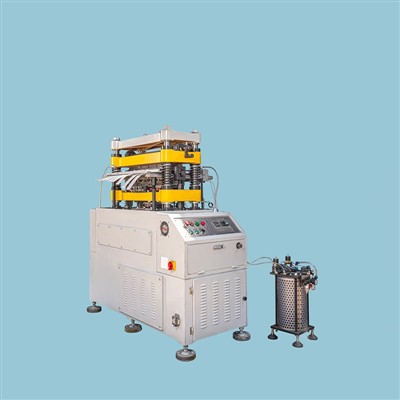
If you’re looking for a corrugated fin forming machine that can adapt to your specific application—whether you need to tweak pitch, height, profile, or all of the above—we can work with you to build a machine that fits your needs, no matter the industry. We’ll walk you through every step, from designing the right corrugation shape to setting up the machine for consistent, high-quality parts. Don’t waste time on a one-size-fits-all machine that can’t keep up with your changing projects. Reach out to us to start the conversation about your requirements—we’re here to help you get exactly the fins you need, perfectly shaped for every job.
Fin Press Machine References
- ASHRAE Handbook: HVAC Systems and Equipment, 2022
- Metal Forming Technology: Corrugated Fin Manufacturing, Society of Manufacturing Engineers, 2021
- Aerospace Heat Exchanger Design Guidelines, NASA Marshall Space Flight Center, 2020
- “Adjustability in Corrugated Fin Forming: Best Practices for Industrial Applications,” Journal of Manufacturing Processes, Vol. 56, 2022
Suichang Lvye Machinery Co., Ltd.
We are one of the most professional corrugated fin forming machine manufacturers in China, also support customized service with low price. We warmly welcome you to buy discount corrugated fin forming machine for sale here from our factory. If you have any enquiry about quotation, please feel free to email us.
Address: No. 402, Mudanting East Road, Miaogao Street, Suichang County, Lishui City, Zhejiang Province
E-mail: L528753@outlook.com
WebSite: https://www.suichanglvye.com/
