If you’ve ever stopped to watch a construction crew lift steel beams into place at a worksite, a warehouse team loading heavy pallets onto a truck, or a small shop operator moving bulky machinery, chances are a portable electric hoist was the tool making the heavy lifting possible. As someone who’s spent the last decade supplying these hoists to businesses across North America, I’m often asked a question that’s at the heart of hoist safety and efficiency: Are there specific training requirements to operate them? The short answer is yes, but the details are more nuanced than a single rule—they depend on everything from the hoist’s load capacity to the worksite’s industry to local regulations. After answering this question hundreds of times for new and existing customers, I wanted to break down what that training actually entails, why it matters, and what we do as a supplier to help operators get the skills they need. Portable Electric Hoist
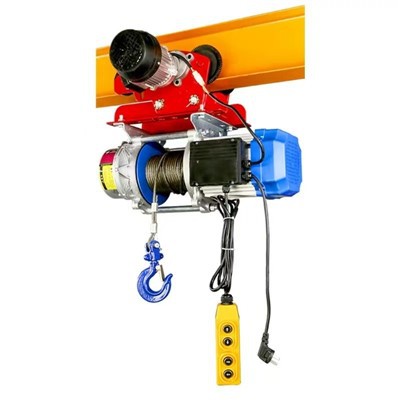
First, let’s start with why training isn’t optional. Portable electric hoists aren’t like carrying a grocery bag—they can lift anywhere from a few hundred pounds to several tons, and a mistake with one can lead to broken equipment, damaged materials, or, in the worst cases, serious injury or fatalities. I remember a customer who reached out to me two years ago, panicking, because an untrained operator at their small manufacturing shop had let a 1,200-pound die slip when they misjudged the hoist’s limit switch. The die fell onto a workbench, cracking the edge of a $20,000 tool and putting the operator out of work for six weeks. That incident stuck with me because it wasn’t a failure of the hoist itself—it was a failure of training. The operator didn’t know how to test the limit switch before use, how to signal to a helper on the ground, or what to do if the hoist started making an unusual noise. Training eliminates those gaps.
Now, let’s get into the specific training requirements, which I’ve organized into three core areas: regulatory mandates, role-specific skills, and hands-on practical training.
Regulatory mandates are the backbone of any hoist training. In the U.S., that means OSHA standards—specifically 29 CFR 1910.179 for overhead and gantry cranes, which covers portable hoists that are part of those systems, and 29 CFR 1910.305 for electrical safety, since portable hoists run on electricity. OSHA requires that all hoist operators be “qualified” or “certified” depending on the hoist’s capacity and use case. For hoists rated for less than 2,000 pounds, many states and local jurisdictions have lighter requirements than larger industrial hoists, but that doesn’t mean training is less important. For hoists rated above 2,000 pounds, OSHA requires formal certification through a recognized training program, which includes both written tests and practical assessments. I also work with customers in Canada, where the Canadian Centre for Occupational Health and Safety (CCOHS) sets similar standards, and in the EU, where CE marking requires compliance with EN 1492-1 for hoist safety. A common mistake new operators make is thinking a manual is enough to meet these regulations—while a manual is required, it’s never sufficient on its own.
Next, role-specific training needs vary widely depending on how the hoist is used. A construction worker who uses a portable hoist to lift framing materials to a second-floor deck has different skills to master than a warehouse order picker who uses a hoist to load pallets, or a hobbyist who uses a small hoist in a home workshop. For construction operators, training must include worksite-specific risks: how to inspect overhead power lines before lifting, how to secure a hoist to a stable anchor point (a mistake here is another common cause of accidents), how to avoid swinging loads that could hit bystanders, and how to handle uneven terrain. I recently supplied a set of 2,000-pound portable hoists to a residential renovation company, and their operators had to complete a 4-hour hands-on course that included practicing lifting materials over a backyard pool (a no-go area, per OSHA rules) and signaling to a ground helper using standard hand signals. For warehouse operators, training focuses on load balance—pallets are rarely perfectly centered, so knowing how to adjust the hoist’s hook to keep the load stable, how to attach safety latches, and how to read load charts that come with each hoist is critical. One of our small-business customers, a custom furniture maker, uses 500-pound hoists to move large tables and chairs, and their operators only need a 2-hour introductory course because the hoists are low-capacity and used in a controlled indoor space. But even for those low-capacity hoists, we always recommend a hands-on walkthrough, not just a video.
The third key area is hands-on practical training, which is where a lot of new programs fall short. Many people think training is just reading a manual, but hoist operation is a physical skill that requires muscle memory. For example, learning how to smoothly lower a load without letting it free-fall takes practice—free-falling can put sudden stress on the hoist’s motor and chain, leading to premature wear. I’ve seen customers skip this part of training to save time, only to end up with hoists breaking down after just a few months of use. As a supplier, we go beyond just selling hoists—we offer free, basic hands-on training for all our customers who purchase industrial-grade hoists. These sessions are led by our in-house safety specialists, who have over 20 years of experience with hoist operation. We teach operators how to do a pre-use inspection (checking the hook, chain, electrical cord, limit switch, and brake for damage), how to calculate load weight to avoid overloading, how to respond to emergency situations (like a stuck load or a sudden power cut), and how to read the hoist’s control panel correctly. We also tailor these sessions to the customer’s specific worksite: for a construction customer, we bring a mock anchor point and practice lifting materials at height; for a warehouse customer, we use pallets to practice load balance.
It’s worth addressing a common myth I hear all the time: “I’ve used a forklift, so I don’t need separate training for a hoist.” While some skills translate (like understanding load weight limits), portable electric hoists operate very differently from forklifts. Forklifts lift loads from below, while hoists lift from above, which changes how you secure the load and how you avoid swinging. Hoists also have smaller control inputs—most use a handheld pendant, which requires precise thumb movements, versus a forklift’s steering wheel and pedals. I had a customer test this myth last year: their forklift operator thought he could operate a 3,000-pound portable hoist without training, and he nearly dropped a load of lumber because he didn’t know how to adjust the hoist’s speed control. That’s exactly why separate training is non-negotiable, even for experienced material handlers.
Another important point is that training isn’t a one-time event. Regulations require ongoing refresher training, usually every three to five years, and more often if an operator is new, changes worksites, or has an accident or near-miss. We encourage our customers to schedule annual check-ins with our safety team to do a quick skills refresh, especially for operators who use their hoists daily. After all, even the most experienced operators can develop bad habits over time—like skipping pre-use inspections to save time—that lead to accidents. As a supplier, we also provide digital training resources for customers, including video tutorials and printable checklists, so operators can review best practices anytime.
Now, let’s talk about what we as a portable electric hoist supplier do to support compliance, because that’s a big part of this conversation. Many hoist manufacturers only provide a manual and leave training up to the customer, but we take a different approach. Every hoist we sell comes with a detailed, industry-specific manual that is written in plain language, not just technical jargon. We also include a free pre-use inspection checklist that operators can keep at their worksite, which is aligned with OSHA requirements. For customers who purchase high-capacity hoists (over 2,000 pounds), we offer optional, affordable certified training through our partner safety organizations, which provides operators with a formal certificate that meets regulatory requirements. We also have a 24/7 support line for customers who have questions about hoist operation, so they don’t have to guess if something is safe.
I know that for small business owners, especially, training can feel like an extra expense. That’s why we structure our training to be flexible—we can host sessions at our facility, send a specialist to the worksite, or even offer virtual training for customers with only a few hoist operators. The cost of training is nothing compared to the cost of an accident, damaged equipment, or regulatory fines. OSHA can fine businesses up to $156,259 for serious violations related to hoist safety, and that’s on top of the human cost of an injury. I’ve seen small contractors go out of business because they couldn’t cover those fines and medical bills, which is why I emphasize to every customer that training is an investment, not a cost.

If you’re a business owner or operator considering purchasing a portable electric hoist, or if you’re looking to update your current training program, the first step is to understand your local regulatory requirements. Start by checking OSHA (or your country’s equivalent) standards for hoist operation, then reach out to a reliable supplier who prioritizes safety as much as product quality. At our company, we don’t just sell tools—we help our customers operate them safely and compliantly. Whether you need a small 500-pound hoist for a home workshop or a set of 5,000-pound hoists for a construction fleet, we can provide the hoist, the training, and the support you need to get the job done right.
Multi-functional Electric Hoist If you have questions about training requirements for a specific type of hoist, or if you’d like to discuss purchasing portable electric hoists for your worksite, please don’t hesitate to reach out to our team to schedule a consultation. We’re happy to walk through your needs, explain the training options available, and help you find the right equipment and resources for your business.
References
- Occupational Safety and Health Administration. (2024). 29 CFR 1910.179: Overhead and gantry cranes. U.S. Department of Labor.
- Canadian Centre for Occupational Health and Safety. (2023). Hoist safety for portable electric hoists. Government of Canada.
- European Committee for Standardization. (2022). EN 1492-1: Textile slings for general purpose lifting – Safety. CEN.
- National Association of Crane & Rigging Manufacturers. (2024). Operator training guidelines for portable electric hoists. NACM.
Hebei Hengtai Crane Machinery Manufacturing Co., Ltd.
Address: Weigezhuang Village, Donglu Township, Qingyuan District, Baoding City, Hebei Province
E-mail: hbht@cnhengtai.com
WebSite: https://www.cnhengtai.com/
