Hey there! I’m a supplier of injection molded parts, and I often get asked about how these parts stack up against other manufacturing methods. So, I thought I’d take a deep – dive into the topic and share some real – world insights. Injection Molded Parts

Let’s start with the basics. Injection molding is a process where molten plastic is forced into a mold cavity, and then it cools and solidifies into the desired shape. Other manufacturing methods include machining, 3D printing, casting, and forging. Each of these has its own unique set of pros and cons, and understanding them can help you decide which one is best for your project.
Cost
One of the first things people look at when choosing a manufacturing method is cost. In injection molding, the upfront cost can be pretty high. You’ve got to design and build the mold, which is no cheap feat. Molds can cost anywhere from a few thousand dollars to hundreds of thousands, depending on the complexity of the part. But here’s the thing: once the mold is made, the cost per unit drops significantly. This makes injection molding a great option if you’re planning to produce a large volume of parts.
On the other hand, methods like machining and 3D printing have a much lower upfront cost. With machining, you can start making parts right away using standard tools and equipment. 3D printing is even more accessible, as you just need a printer and some filament. However, the cost per unit tends to be higher, especially for large – scale production. For example, if you’re making 10,000 parts, injection molding will likely end up being much more cost – effective than 3D printing or machining.
Production Speed
When it comes to how fast you can get your parts, different manufacturing methods vary widely. Injection molding is a production powerhouse for high – volume runs. Once the mold is in place and the machine is set up, it can crank out parts at a rapid pace. A typical injection molding cycle can take anywhere from 10 seconds to a few minutes, depending on the size and complexity of the part. So, if you need a large number of parts quickly, injection molding is your friend.
3D printing, while cool and versatile, is generally much slower. It builds parts layer by layer, which takes time, especially for larger or more complex objects. Machining also has its limitations in terms of speed. You’ve got to set up the machine, program the tool paths, and then go through the cutting process. And if you need to make multiple parts with the same design, you’ve got to repeat the whole process each time.
Casting can be relatively fast for some types of parts, but it often involves a lot of steps like making the pattern, preparing the mold, and pouring the molten material. Plus, there’s usually some post – processing involved, which adds to the overall production time.
Precision and Tolerance
If you need parts with very tight tolerances, injection molding is often a top choice. Modern injection molding machines are capable of producing parts with extremely high precision. The mold is designed to exact specifications, and the injection process ensures that the part conforms to those dimensions. Of course, achieving high precision in injection molding requires careful mold design, the right choice of materials, and proper process control.
3D printing has come a long way in terms of precision, but it still has some limitations. The layer – by – layer building process can sometimes result in a slightly rough surface finish, and achieving very tight tolerances can be challenging. Machining can offer excellent precision, especially when using high – end CNC machines. However, the precision depends on the skill of the machinist and the quality of the equipment.
Casting and forging may not offer the same level of precision as injection molding or machining. In casting, factors like shrinkage during cooling can affect the final dimensions of the part. Forging can change the shape of the material, and getting precise tolerances can be difficult without additional machining operations.
Material Options
Injection molding gives you a wide range of material options. You can use various types of plastics, including engineering plastics that offer high strength, heat resistance, and chemical resistance. There are also bio – based plastics available if you’re looking for a more environmentally friendly option. And you can add different additives to the plastic, like colorants, fillers, and reinforcements, to achieve specific properties.
3D printing materials are also diverse, but the selection is relatively more limited compared to injection molding. You’ve got plastics like PLA, ABS, and PETG, as well as some more specialized materials like nylon and resin. However, using high – performance materials in 3D printing can be quite expensive.
Machining can work with a variety of materials, including metals, plastics, and wood. But some materials can be difficult to machine, especially hard metals or brittle plastics. Casting can use metals, polymers, and ceramics, but the material properties can be affected by the casting process.
Part Complexity
When it comes to making complex parts, injection molding shines. The mold can be designed to create parts with intricate shapes, undercuts, and thin walls. You can also produce multi – component parts in a single injection molding operation using techniques like overmolding. This saves time and cost compared to assembling multiple individual parts.
3D printing is great for creating complex geometries that would be difficult or impossible to make with other methods. It has the ability to build parts with internal cavities and organic shapes. However, there are still limitations in terms of the size of the part and the materials that can be used.
Machining has some challenges when it comes to complex parts. Producing parts with undercuts often requires special tools and additional operations. Complex geometries can also increase the machining time and cost significantly. Casting can produce parts with relatively complex shapes, but there are limitations due to factors like mold design and the flow of the molten material.
Surface Finish
Injection molding can provide a smooth and consistent surface finish right out of the mold. The mold surface can be polished to achieve a high – gloss finish or textured to create a specific look and feel. This reduces the need for post – processing, which saves time and cost.
3D printing surface finish can vary depending on the printing method and material. Some 3D printers can produce parts with a relatively smooth finish, but others may result in a more visible layer – by – layer texture. Post – processing like sanding or polishing is often required to achieve a high – quality surface.
Machining can offer a good surface finish, but it depends on the cutting tools and the machining parameters. Some materials may require additional finishing operations like grinding or buffing. Casting parts usually need some level of post – processing to improve the surface finish, as the initial surface can be rough due to the mold and the solidification process.
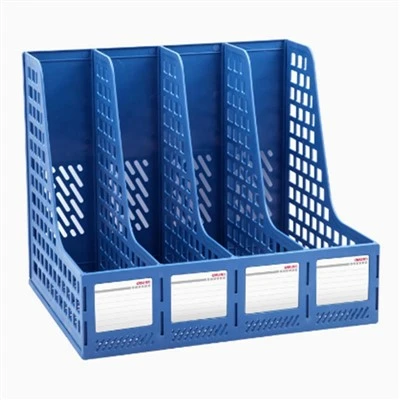
Plastic Household Items After weighing all these differences, it’s clear that injection molded parts have a lot to offer, especially for large – scale production, high precision requirements, and complex part designs. If you’re in the market for high – quality injection molded parts, I’d love to talk to you about your project. Whether you’re a startup looking to bring a new product to market or an established company looking to improve your manufacturing process, I’ve got the expertise and resources to help. Don’t hesitate to reach out and let’s have a chat about how I can meet your injection molding needs.
References
- An Introduction to Manufacturing Processes, Fourth Edition, by Metin Korlaet al.
- Plastic Injection Molding Handbook, by Dominik Johannaber
- 3D Printing: Principles and Applications, by Ian Gibson, David Rosen, and Brent Stucker.
Yongkang Shunjiang Plastic Products Co., Ltd.
As one of the most professional injection molded parts manufacturers and suppliers in China, we offer a wide range of products with superior quality. Please feel free to wholesale bulk customized injection molded parts from our factory. Also, pricelist is available.
Address: Kangzhuang Road, Xicheng Subdistrict, Yongkang City, Zhejiang Province, China
E-mail: 15158911623@163.com
WebSite: https://www.shunjiangplas.com/
