Hey everyone, if you’re working with Eaton’s N, NS, or PN series switch disconnectors—whether you’re an electrician doing routine maintenance, an industrial tech prepping a new installation, or even a warehouse manager double-checking gear for a facility upgrade—you’ve probably run into the continuity test question. As a supplier that’s dealt with these units nonstop for years, I’ve seen so many folks overcomplicate this step, or skip it entirely and end up with way bigger headaches later. Today, I’m breaking down exactly how to do the continuity test right for Eaton’s three core switch disconnector lines, no fancy jargon required, and making sure you don’t miss a single critical detail. Eaton N / NS / PN Series Switch Disconnectors
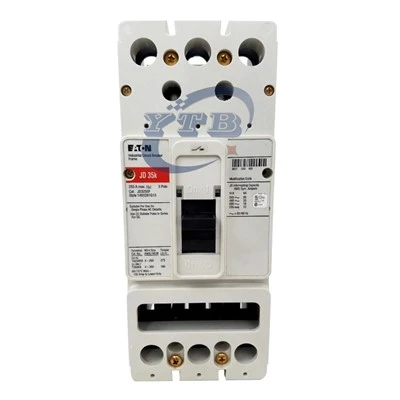
First, let’s get on the same page: what are we even testing for here? Continuity in a switch disconnector means all the conductive parts that should carry power (the main contacts, phase terminals, neutral links, any auxiliary connections) don’t have breaks, corrosion, or loose wire that would kill the flow of electricity. It’s not just about making sure the switch turns on and off—this test confirms the unit is actually safe to use as a disconnect, not just a glorified toggle. For Eaton’s N, NS, and PN series, each has tiny design quirks, so cutting corners on the test method can lead to inaccurate results, which is why I’m walking through each one separately.
Before we dive in, let’s cover the non-negotiables you need to grab first, because showing up to test without these is like showing up to a job with no screwdriver. You don’t need super expensive gear here—just a digital continuity tester (the ones that beep when a circuit is closed, super common on Amazon or at electrical supply shops) or a multimeter set to the ohms (Ω) setting. Pro tip: don’t use a analog multimeter for this—they’re finicky, and Eaton’s specs call for precise readings, so digital is non-negotiable. Also, you need basic PPE: rubber gloves rated for electrical work, safety glasses, and a non-conductive mat to stand on, because even if you think the power’s off, double-checking with a voltage tester before touching anything is just smart business. Wait, hold on—rule number one I drill into every tech I work with: always turn off the main power supply to the switch disconnector before doing any test. Even if you’re sure it’s disconnected, test the terminals with that voltage meter first to confirm zero voltage. No exceptions. I once had a new intern skip that step and get a tiny shock—nothing serious, but it made the whole warehouse hold its breath for 10 minutes. Don’t be that person.
Let’s start with the Eaton N Series—this is the workhorse, the go-to for small commercial offices, retail spaces, and even light industrial setups. It’s compact, easy to install, and its continuity test is straightforward, but there’s a step most people miss. First, make sure the N series switch is in the OFF position. Now, locate the main terminals: you’ll have three phase terminals (L1, L2, L3) and a neutral terminal (N) on the back, plus the load side terminals on the front? No, wait—wait, no, better to clarify: when the switch is OFF, the line side is where power comes in, load side is where it goes out to your equipment. For continuity on the N series, you’re testing that when the switch is ON, the line and load sides of each phase and neutral are connected. So set your tester to continuity mode. Touch one probe to L1 (line side) and the other to L1 (load side). You should get a beep and a resistance reading under 0.5 ohms—anything higher means a loose contact or a tiny break in the conductor, which is a problem. Do that same test for L2, L3, and N. Now, what about when the switch is OFF? You should get no beep, and a resistance reading of “OL” (over limit) or infinity—if you get a beep here, that means the switch is arcing across, which is a fire hazard. For N series, also check the auxiliary contacts if your unit has them (some N models come with aux switches for alarms): those should have continuity when the main switch is ON, and no continuity when OFF. That’s the quick N series check, but I always recommend doing a visual too—flip the switch on and off a few times while testing, because sometimes a contact sticks only at the end of the throw, and you don’t want to miss that.
Next up: the Eaton NS Series. This is the heavy hitter, used for industrial applications, factories, places where you’re switching high loads—think 100A to 630A, so these units are bigger, sturdier, and have extra safety features that make their continuity test a little more involved. The NS series has a main disconnect mechanism that’s designed to handle massive loads, so the contacts are larger, and sometimes they have a soft metal plating that wears if not tested right. First, same initial step: turn off main power, lockout/tagout the panel (seriously, lock it out—NS series can hold a charge for a few minutes even after power’s off, so LOTO is non-negotiable here). Now, for NS series, you’ll want to do two levels of continuity test: phase-to-phase and individual phase. Start with the switch in OFF position. Touch your tester probe to L1 line side, then to L2 line side, then L3 line side, then N line side—you should get no continuity between any of these, that’s how it should be when off. Now, flip the NS switch to ON. Now test each phase line to load: L1 line to L1 load, L2 line to L2 load, L3 line to L3 load, N line to N load. Each of these should read under 0.3 ohms—Eaton’s spec for NS is tighter than N because these carry more current, so a higher resistance here means overheating down the line. The extra step for NS series: check the grounding terminal. There’s a dedicated ground lug on the bottom of most NS units—test continuity between that lug and any exposed metal part of the switch frame (the plastic part doesn’t count, the metal mechanism inside) when the switch is OFF. You should get a beep here, that confirms the ground path is intact, which is critical for high-load applications where a short could cause a huge issue. I once had a manufacturing client skip this ground test on an NS series unit in their assembly line, and a couple months later a loose ground caused a 3-hour shutdown that cost them $20k. Don’t let that be you—this extra 30 seconds could save you way more.
Now the PN Series, Eaton’s compact power distribution switch disconnector, super popular for residential and small commercial combi panels, where space is tight. PN is smaller, so the contacts are a bit more delicate, which means your test has to be more precise than the other two. PN series has a built-in neutral disconnector, which is a big feature, so you’ll want to test that specific function too. First again: power off, test for residual voltage with your meter before touching anything. PN is usually mounted in a panel, so you might have to remove the front cover (it just clips off, no tools needed for most models) to get access to the terminals—just be careful not to scratch the plastic, it’s easy to crack. Now, switch to ON position. Test each phase line to load: L1, L2, L3 each line to load, should beep, resistance under 0.4 ohms. Now here’s the PN-specific part: test the neutral. When the switch is ON, the neutral line terminal should connect to the neutral load terminal—you should get continuity here. When you flip the switch to OFF, the neutral should disconnect first (Eaton designed PN to break neutral before phases when off, for safety), so test neutral line to load again when OFF—no continuity, that’s exactly what you want. If you still get continuity on neutral when off, that means the neutral disconnector is faulty, which is a huge safety issue because if you work on the load side, the neutral is still live. I once had an electrician come to me with a PN unit that failed this test—he’d installed it in a duplex and the neutral stayed connected, which would have shocked anyone working on the dryer circuit. We got him a replacement same day, no hassle, but it goes to show how specific the PN test is.
Wait, let’s talk about common mistakes I see all the time, because these are the things that make test results wrong. First: not calibrating your tester. If you just grabbed a random continuity meter, test it first by touching both probes together—should beep, that confirms the tester works. If it doesn’t beep, your test is garbage. Second: testing when the switch is partially between on and off. Sometimes the toggle gets stuck mid-throw, so always flip it all the way to on, all the way to off, test both positions. Third: skipping the line side vs load side distinction. A lot of folks test across the switch toggle itself, not the terminals, which misses loose terminal screws—those are super common on PN and N series, if a terminal isn’t torqued right, even if the switch works, power isn’t getting through. And fourth: not testing after installing. I can’t tell you how many times a customer will call me saying their new Eaton switch is acting up, and it turns out the electrician installed it, didn’t do a continuity test, and a wire was loose.
Let’s also cover when you might not do this test? Wait, no—you should do it every time you install a new unit, every time you do a maintenance check (I recommend annual for commercial, bi-annual for industrial), and anytime the switch gets dropped or moved (even a tiny drop can jar the contacts loose inside). Eaton’s maintenance manual actually recommends this as the first step in any switch disconnector check, right after visual inspection for cracks or corrosion on the plastic housing.
Now, if you’re someone who’s doing this for the first time, here’s a quick recap cheat sheet I keep taped to my work truck: For N Series: ON = beep/ <0.5Ω L1/L2/L3/N line to load; OFF = no beep. For NS Series: ON = beep/ <0.3Ω line to load; OFF = no beep, plus ground continuity. For PN Series: ON = beep/ <0.4Ω line to load + neutral continuity; OFF = no neutral continuity. Easy to remember, no need to dig through manuals mid-job.
As a supplier that’s worked with Eaton N, NS, PN units for over 10 years now, I’m here to tell you that the continuity test isn’t just a box to check—it’s the best way to make sure you’re getting the performance and safety Eaton advertises. I’ve seen people try cheaper knock-offs, and their continuity tests fail every time, but Eaton’s lines, when tested right, hold steady for decades. If you’ve got a unit that’s failing this test, don’t try to jerry-rig it—reach out to someone who knows these units, because a bad switch disconnector is a liability waiting to happen.

Speaking of reaching out: if you need replacement parts, a new unit, or have questions about testing a specific Eaton N, NS, or PN model, hit us up. We stock all three lines, have techs on call who can walk you through any step of the continuity test, no matter how big or small your job is. Don’t risk skipping this test and running into issues down the line—let us help make sure your Eaton switch disconnectors are working exactly as they should.
BECKHOFF References: Eaton Corporation. (2022). Switch Disconnector Technical Manual: N, NS, PN Series. Eaton Electrical Division; National Electrical Code (NEC). (2023). Article 404: Switch Disconnecting Means Requirements. National Fire Protection Association.
Yuntengbao Automation (Xiamen) Co., Ltd.
Address: Room 013, 4th Floor, No. 606-4, Xinglong Road, Huli District, Xiamen City, Fujian Province, China
E-mail: lrene@plcsupplychain.com
WebSite: https://www.plcsupplychain.com/
