Hey everyone, let’s cut to the chase – if you’ve ever stood in a hardware store or stayed up till 2am swapping out rusted bolts on a trailer, a patio fence, or even a bike, you’ve asked yourself the same question: “Will this thing hold up when it gets wet, or covered in road salt, or just sitting in a damp garage?” And if you’re here because you’re sorting through fasteners for your next project, you’re probably asking about hex flange bolts specifically – right? I’m a hex flange bolt supplier, so this is my lane, and today I’m breaking down their corrosion resistance, no stuffy textbook jargon, just real talk from someone who deals with these things every single day. Hex Flange Bolt
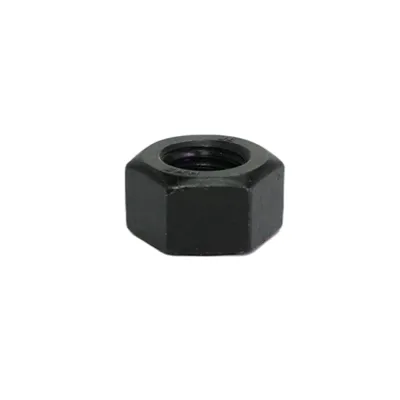
First off, let’s make sure we’re on the same page: what even is a hex flange bolt? You know that one fastener with the built-in washer under the hexagonal head? No separate washer, no fumbling around dropping tiny flat rings – it’s a one-piece design, perfect for people who hate wasting five minutes digging a washer out of a grassy lawn mid-repair. That flange part isn’t just for convenience, though – it’s a big part of why their corrosion resistance is better than regular hex bolts. The flange creates a wider bearing surface, which means less pressure on the material, but more importantly, it seals the gap between the bolt head and whatever it’s attached to. No water, no salt, no gunk getting trapped in that tiny gap that regular bolts leave behind to turn into rust soup. Clever, right?
Now, corrosion resistance isn’t a one-size-fits-all thing. Let’s be real – a bolt holding a plastic garden sign is never going to face the same abuse as one holding a steel frame for a construction crane that’s out in the Texas sun and humidity, or one holding a trailer hitch that gets blasted with road salt every winter in Minnesota. So hex flange bolts come in different materials, and that material is the single biggest factor in how well they resist corrosion. I see way too many people grab the shiniest bolt at the store, not realizing “shiny” doesn’t mean “rust-proof.” Let’s go through the main materials we carry, and what their real-world corrosion performance looks like.
First, the workhorse: carbon steel, usually zinc-plated or galvanized. Wait, I know what you’re thinking – galvanized stuff gets white rust, right? Let’s clarify. Hot-dip galvanized hex flange bolts are dipped in molten zinc, so the entire bolt – head, threads, flange – is coated in a thick layer of zinc. Zinc is a sacrificial metal, meaning it corrodes before the steel underneath. If a scratch chips the zinc coating, the surrounding zinc will corrode instead of the steel bolt core. That’s a big win for hardware, automotive, and general construction where you’re not dealing with super harsh environments. Hot-dip galvanized ones will last 10–15 years in normal outdoor conditions – like a fence on a suburban lot that gets rain but not constant standing water. But the thinner zinc-plated ones (the kind you get at the dollar store) will start showing white rust (that powdery white gunk) after 2–3 years, and red rust (actual steel rust) not long after. I only stock hot-dip galvanized for most projects because the cheap thin-plated ones are a waste of money – you’ll just be replacing them again soon.
Next, stainless steel. This is where most people get confused, because there are different grades of stainless, not all equal when it comes to corrosion. 18-8 stainless (also called 304) is the most common, and it’s great for general use – kitchen fixtures, patio furniture, non-salty outdoor parts. It resists rust way better than galvanized, lasts 20+ years in normal outdoor conditions, but it’s not perfect. If you put 304 stainless near saltwater, or constant road salt, that chloride eats at the chromium layer that makes stainless steel corrosion-resistant. You’ll start seeing pits (tiny little rust spots) in a few years. So 304 is for the beach house porch, not the boat trailer that’s submerged in saltwater every weekend.
Then there’s 316 stainless steel – that’s the “marine grade” stuff, and it’s the heavy hitter for corrosion resistance. It has molybdenum added to the mix, which makes it immune to chloride corrosion. I’ve seen 316 stainless hex flange bolts holding boat cleats, dock hardware, and saltwater pool parts for 10+ years with zero rust, even after being dunked in saltwater constantly. Yeah, it’s a little pricier, but if you’re dealing with salt or harsh chemicals (like a farm equipment that gets sprayed with fertilizer or antifreeze), it’s worth every penny. I can’t tell you how many times a dock builder has come back to me, panicking because their 304 bolts are pitting, and we swap them out for 316, and they haven’t had an issue since.
Wait, there’s another type too – coated steel beyond zinc, like yellow zinc or black oxide. Yellow zinc is just a colored version of the thin zinc plating I mentioned earlier, still prone to rust. Black oxide is a thinner, darker coating, mostly for indoor use – like machine parts or door hardware, where it’ll resist light moisture but not outdoor rain or humidity. I only carry these for specific indoor projects; they don’t hold up to outdoor corrosion, so I’d never recommend them for something exposed to the elements.
Now, it’s not just the material – how you use the bolt matters for corrosion resistance too. I see people make mistakes all the time, and those mistakes cut the lifespan of a hex flange bolt in half. First, make sure you’re matching the bolt material to the environment. Don’t use galvanized bolts with stainless steel parts, or vice versa. When two different metals touch in damp conditions, you get galvanic corrosion – that’s when one metal acts like a battery and corrodes the other. I had a customer a few months back who used galvanized hex flange bolts to attach a stainless steel patio railing. Within a year, the galvanized bolts were eaten away, and the stainless was stained. We fixed it by using stainless bolts for the entire railing, problem solved. Second, don’t over-tighten the bolt. If you crank it down so hard that the flange or the head cracks, that’s a break in the coating – water gets in there, and it starts corroding from the inside. Third, keep the area around the bolt clean. If you have a bolt on a fence that’s covered in leaves or dirt all year, moisture gets trapped, and corrosion accelerates. A quick rinse a few times a season goes a long way.
Let’s talk about some real test cases, because numbers are cool but actual use is better. Last year, I supplied hex flange bolts to a guy building a back deck. He went with hot-dip galvanized, since it’s a suburban deck, no salt. A year and a half later, he sent me a pic – the bolts look almost new, no rust, even under the railings where moisture sits. Compare that to a customer who used thin zinc-plated bolts for his mailbox post – those were rusted through in 18 months, he was back ordering replacements in a panic. Another customer had a boat lift on Lake Michigan, went with 316 stainless bolts – two years in, after constant saltwater exposure, no pitting, no rust, still holding strong. That’s the difference between matching the bolt to the job.
A common question I get: “Can I improve a bolt’s corrosion resistance after I install it?” A lot of people ask about painting them, or spraying them with sealant. Yeah, you can, but it’s not always the best idea. If the coating is intact, leave it – painting over galvanized or stainless can trap moisture if you don’t do it right, leading to more corrosion. If you do have a scratch, touch-up paint made for that specific material works, but it’s not a long-term fix. For most people, just picking the right bolt in the first place is easier and way more effective.
So, to wrap this up: hex flange bolts are already more corrosion-resistant than regular hex bolts because of that built-in flange that seals out gunk and gap corrosion. But their actual corrosion resistance depends 100% on what they’re made of. Hot-dip galvanized is great for general outdoor use, residential projects, non-salty environments. 304 stainless is better for moderately harsh conditions, patios, pool areas without salt. 316 stainless is the only way to go for saltwater, road salt, farm equipment, or any super harsh environment. Skip the thin zinc or black oxide bolts for outdoor use – they’re a waste of money. And don’t forget to match the bolt to the material you’re attaching, clean around them occasionally, and don’t over-tighten.
If you’re working on a project right now – a fence, a trailer, a boat, a deck, whatever – and you’re not sure which hex flange bolt is right for your needs, hit me up. I’ve been in this business long enough to help you pick the right one, no upselling, just honest advice so your bolts don’t rust out before you finish the project. I’m here to make sure your fastener decisions are solid, not something you have to fix six months later. Don’t hesitate to reach out and chat through your requirements.
Hex Flange Nut References
- ASME B18.2.1: Square and Hex Bolts and Screws, Inch Series
- Corrosion Behavior of Hexagonal Flange Bolts in Atmospheric and Marine Environments, Journal of Fastener Technology, 2021
- Stainless Steel Grades for Fastener Applications, International Stainless Steel Forum, 2022
- Galvanic Corrosion Guidelines for Fastener Assemblies, National Association of Corrosion Engineers (NACE), 2019
Jiaxing Jinling Hardware Technolgy Joint Stock Co., Ltd.
As one of the most experienced hex flange bolt manufacturers and suppliers in China, we also support customized service. Please feel free to buy bulk high-grade hex flange bolt made in China here from our factory. For quotation and price list, contact us now.
Address: No.32, Shenjiadai, Xuyouche Village, Qinshan Subdistrict, Haiyan County, Zhejiang Province, China
E-mail: jlzxl@jinlingfstn.com
WebSite: https://www.china-nut-factory.com/
