Hey there! As a supplier of kitchen range hood fans, I often get asked this one burning question: Can a ductless kitchen range hood fan filter grease effectively? Well, let’s dig into this topic and find out. Kitchen Range Hood Fan
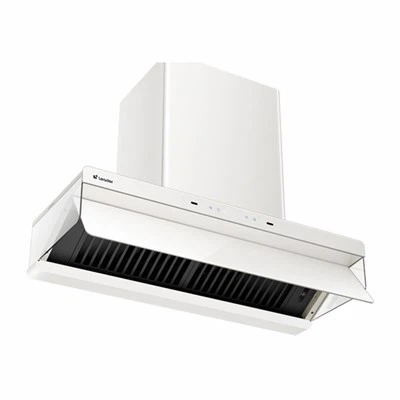
First off, let’s understand what a ductless kitchen range hood fan is. Unlike its ducted counterpart that vents the air outside your home, a ductless range hood recirculates the air back into the kitchen after filtering it. This is a popular choice for many homeowners, especially in apartments or older homes where installing ductwork might be a real hassle.
Now, onto the main event – grease filtering. Grease is a big problem in the kitchen. When you’re cooking, especially when you’re frying or grilling, grease particles get released into the air. If not properly filtered, this grease can coat your kitchen surfaces, furniture, and even your appliances, causing a sticky mess and potentially attracting pests.
So, can a ductless kitchen range hood fan handle this? The short answer is yes, but with some caveats.
Most ductless range hood fans come equipped with a combination of filters. There are usually pre – filters that are designed to trap the larger grease particles. These are often made of mesh or some sort of porous material. Think of them as the first line of defense. They catch the big chunks of grease before it gets to the main filter.
The main filter in a ductless range hood is typically a carbon filter. Carbon is great at adsorbing odors and some of the finer grease particles. It works through a process called adsorption, where the contaminants in the air stick to the surface of the carbon. But here’s the thing – carbon filters have a limited capacity. Over time, as they accumulate more and more grease and other contaminants, their effectiveness starts to decline.
Let’s talk about the science behind it a bit. Grease particles in the air are tiny, and their size can vary. The pre – filters are designed to target the particles that are big enough to be physically trapped in the mesh. But the carbon filter has to deal with the smaller, more elusive particles. The carbon has a large surface area with lots of tiny pores. These pores attract and hold onto the grease molecules, but once they’re full, the filter can’t do its job as well.
In my experience as a supplier, the efficiency of a ductless range hood in filtering grease also depends on a few other factors. One of the most important ones is the cfm (cubic feet per minute) rating. This measures how much air the range hood can move in a minute. A higher cfm rating means that the range hood can suck up more air and, in theory, catch more grease. For a typical home kitchen, a range hood with a cfm rating of around 300 – 600 is usually sufficient. But if you do a lot of heavy – duty cooking like deep – frying or making a lot of stir – fries, you might want to go for a higher cfm model.
Another factor is the placement of the range hood. It should be installed at the right height above the stovetop. If it’s too high, it might not be able to capture all the grease – laden air. Most manufacturers recommend installing the range hood between 24 and 36 inches above the cooking surface.
Now, let’s look at the pros and cons of using a ductless range hood for grease filtering.
Pros
- Easy installation: As I mentioned earlier, you don’t need to deal with messy ductwork. This means you can have it up and running in no time. It’s a great option for renters or those who don’t want to make major modifications to their kitchen.
- Cost – effective: Since you’re not paying for duct installation, the initial cost of a ductless range hood is usually lower. And in the long run, the energy costs are also relatively low because there’s no energy loss through the ducts.
- Can be used in any location: Whether you’re in an apartment with strict building codes or a home where duct installation is just not feasible, a ductless range hood can be a great solution.
Cons
- Filter replacement: The carbon filters need to be replaced regularly. Depending on how often you cook, you might need to replace them every 3 – 6 months. This can add up over time.
- Limited efficiency: While ductless range hoods can filter a significant amount of grease, they might not be as effective as ducted ones in the long run. Ducted range hoods literally take the grease – filled air out of your home, so there’s no chance of it recirculating.
- Odor build – up: Even with the carbon filters, some odors might still linger in the kitchen over time, especially if you’re cooking strongly scented foods.
In conclusion, a ductless kitchen range hood fan can filter grease effectively, but it’s not a one – size – fits – all solution. It’s a good option for light to moderate cooking, and with proper maintenance, it can keep your kitchen clean and fresh. However, if you’re a serious cook who does a lot of high – heat, greasy cooking, you might want to consider a ducted range hood.
If you’re in the market for a kitchen range hood fan and have any questions about ductless options or just want to learn more about our products, don’t hesitate to reach out. We’re here to help you find the perfect solution for your kitchen.
Solar Fan References
- "The Basics of Kitchen Ventilation", Kitchen & Bath Business Magazine
- "Understanding Range Hood Ratings", Home Improvement Journal
- "Carbon Filters: How They Work and When to Replace Them", Air Quality Research Institute
Shengzhou Geeking Electric Appliance Technology Co., Ltd.
Address: No. 19, Putian Avenue, Pukou Subdistrict, Shengzhou City
E-mail: 13588516010@163.com
WebSite: https://www.geekingfan.com/
